
Guardians of the House of Allah (Masjid): Mutawalli Duties Under the Waqf Amendment Act 2025 and Divine Accountability

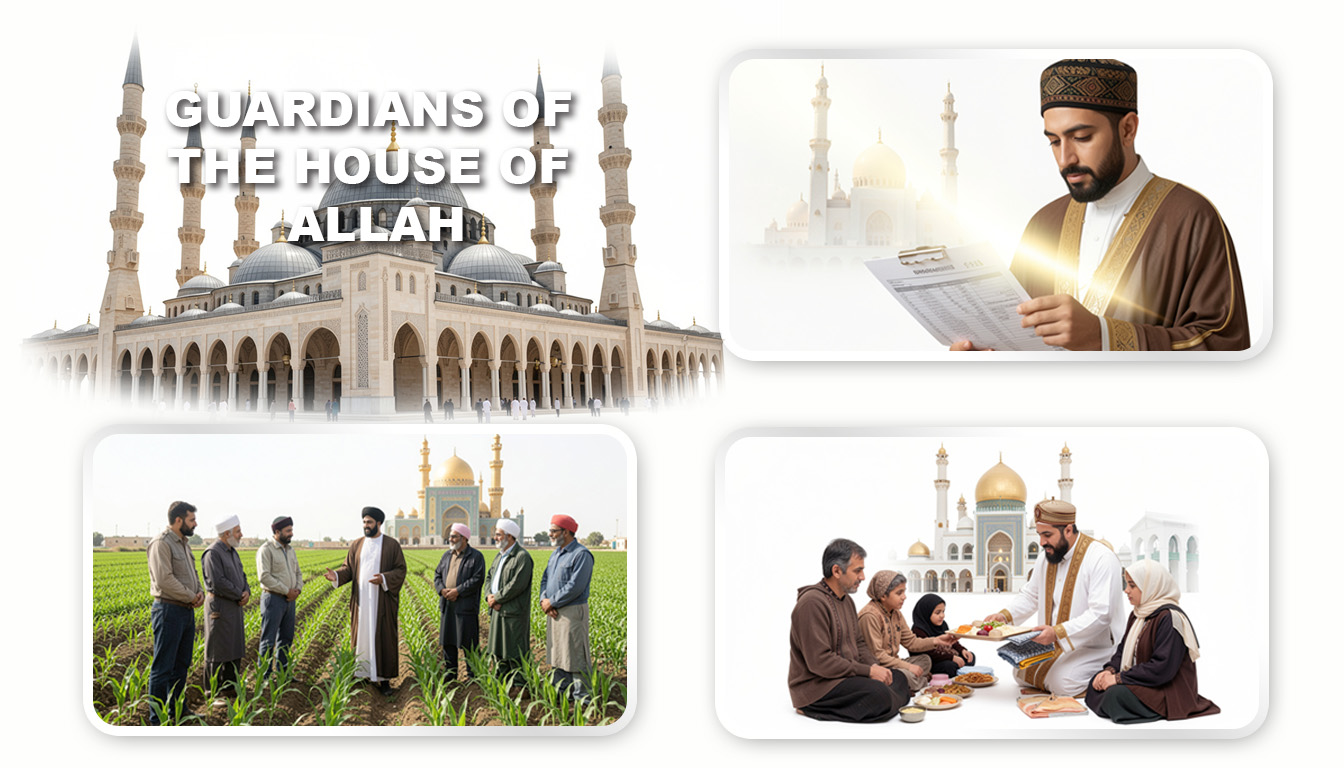
Mutawalli Duties Under the Waqf Amendment Act 2025 and Divine Accountability
Serving as a Mutawalli (trustee or administrator) of a Masjid is one of the most noble yet heavy responsibilities a believer can take on. A Mutawalli is not a boss or a ruler; they are the caretaker of property dedicated solely to Allah. And Also Most important that Mutawalli should be someone who cares for the development of our society, in both deen and duniya.
With the enforcement of the Waqf (Amendment) Act 2025 (often referred to as the UMEED Act), the legal landscape for managing Masjid properties in India has changed significantly. Simultaneously, Islamic law lays down severe warnings regarding financial and administrative integrity.
1. Legal Duties Under the Waqf Amendment Act 2025
The 2025 Amendment shifts the management of Waqf properties toward structural transparency, digital compliance, and rigorous state oversight. Masjid administrations must strictly adhere to these updated statutory mandates:
- Mandatory Centralized Registration: Mutawallis are legally required to register all details of the Masjid and its attached properties on a centralized online portal and database within six months of the law’s enforcement.
- Stricter Property Validation: The historic doctrine of “Waqf by user” (claiming a property as Waqf simply because it has been used for religious purposes for a long time) has been removed. Mutawallis must ensure all properties have concrete, verified land titles validated through the District Collector’s revenue records.
- Reduced Waqf Board Contributions: In a supportive move for local development, the mandatory contribution from the Masjid’s annual income to the State Waqf Board has been reduced from 7% to 5%. The remaining funds must be directly funneled back into local charitable activities, maintenance, and welfare.
- Compulsory Audits: For all Waqf entities with an annual income exceeding ₹1 lakh, strict annual audits are mandatory. These accounts are now subject to oversight and checking by the Comptroller and Auditor General (CAG) or state-appointed auditors.
- Protection of Rights and Inclusivity: The Act strictly forbids creating any new Waqf that disinherits lawful heirs, especially women and children. Furthermore, State Waqf Boards will now feature more diverse representation, including a mandate for at least two Muslim women and representation for backward Muslim classes.
2. Spiritual Duties According to the Quran and Hadith
While state laws govern worldly administration, a Mutawalli’s core operating system comes directly from Divine Revelation.
The True Purpose of Building and Maintaining Masjids
The Holy Quran clearly defines who is spiritually qualified to manage and maintain the houses of Allah:
“The Masjids of Allah shall be maintained only by those who believe in Allah and the Last Day, establish prayer, give Zakah, and fear none except Allah. It is they who are expected to be among the [rightly] guided.” — Surah At-Tawbah (9:18)
Honesty and Absolute Trust (Amanah)
A Masjid administration handles public donations and sacred property. Misusing these funds is a direct violation of the trust given by Allah:
“Indeed, Allah commands you to render trusts to whom they are due and when you judge between people to judge with justice…” — Surah An-Nisa (4:58)
The Prophet Muhammad (ﷺ) warned that a lack of administrative honesty is a sign of hypocrisy and a symptom of a breaking society:
“The signs of a hypocrite are three: Whenever he speaks, he tells a lie; whenever he promises, he breaks his promise; and whenever he is trusted, he proves treacherous.” — Sahih al-Bukhari
3. The Ultimate Accounting: Lessons for Mutawallis on the Day of Judgment
Every rupee collected in a donation box, every inch of land belonging to the Masjid, and every decision made behind closed doors will be scrutinized on the Day of Reckoning. Mutawallis must govern themselves with three sobering realities in mind:
Every Shepherd is Responsible for His Flock
Leadership in Islam is a burden, not a privilege. The Prophet Muhammad (ﷺ) said:
“All of you are shepherds and every one of you is responsible for his herd. A leader is a shepherd and is responsible for his subjects…” — Sahih al-Bukhari
Masjid administrators will stand alone before Allah and be questioned about how they managed the wealth, comfort, and spiritual environment of the community.
The Danger of Financial Misappropriation (Ghulul)
Taking even a tiny portion of Waqf or public money for personal use, or allocating it unfairly to relatives, carries an terrifying penalty. The Quran warns:
“And whoever defrauds [Sharing/taking illegally] will come with what he defrauded on the Day of Resurrection. Then will every soul be [fully] compensated for what it earned, and they will not be wronged.” — Surah Ali ‘Imran (3:161)
True Leadership is Humility and Service
True Islamic leadership means serving the people (Sayyidul Qawmi Khadimuhum). Mutawallis who use their positions for social status, ego, or local political control risk losing their rewards in the Hereafter.
Summary Checklist for Modern Mutawallis
To bridge legal compliance with spiritual safety, modern Masjid administrations should implement the following blueprint:
| Action Item | Legal Basis (2025 Act) | Spiritual Basis (Islam) |
| Digitize Records | Register property details online within 6 months. | Ensuring transparent Amanah (Trust). |
| Verify Land Titles | Submit revenue documentation to the Collector. | Avoiding unlawful land disputes. |
| Financial Transparency | Reduce Board fee to 5%; undergo mandatory audits. | Accountability before Allah for every penny. |
| Community Welfare | Spend local income on widows, orphans, and education. | Executing the true purpose of charity (Waqf). |
A Final Reminder: The Waqf Amendment Act 2025 may demand transparency on a digital portal monitored by the government, but Islam demands an even higher level of transparency—one monitored by the angels and recorded in your Book of Deeds. Administer your Masjids such that your accounts are clean both on the state ledger and on the Day of Judgment, and also working for the development of the community.
“In some places, the worst part is that instead of guiding the Mutawallis in the right direction when they violate the Wakf Act, they are creating sangams—similar to labor unions guarding laborers—to shield their position as Mutawallis and protect them.”