
Beyond Leading the Prayer: The True Duties of a Masjid Imam According to Quran and Sunnah

தொழுகையை வழிநடத்துவதையும் தாண்டி: குர்ஆன் மற்றும் சுன்னாவின் அடிப்படையில் மஸ்ஜித் இமாமின் உண்மையான கடமைகள்
Beyond Leading the Prayer: The True Duties of a Masjid Imam According to Quran and Sunnah
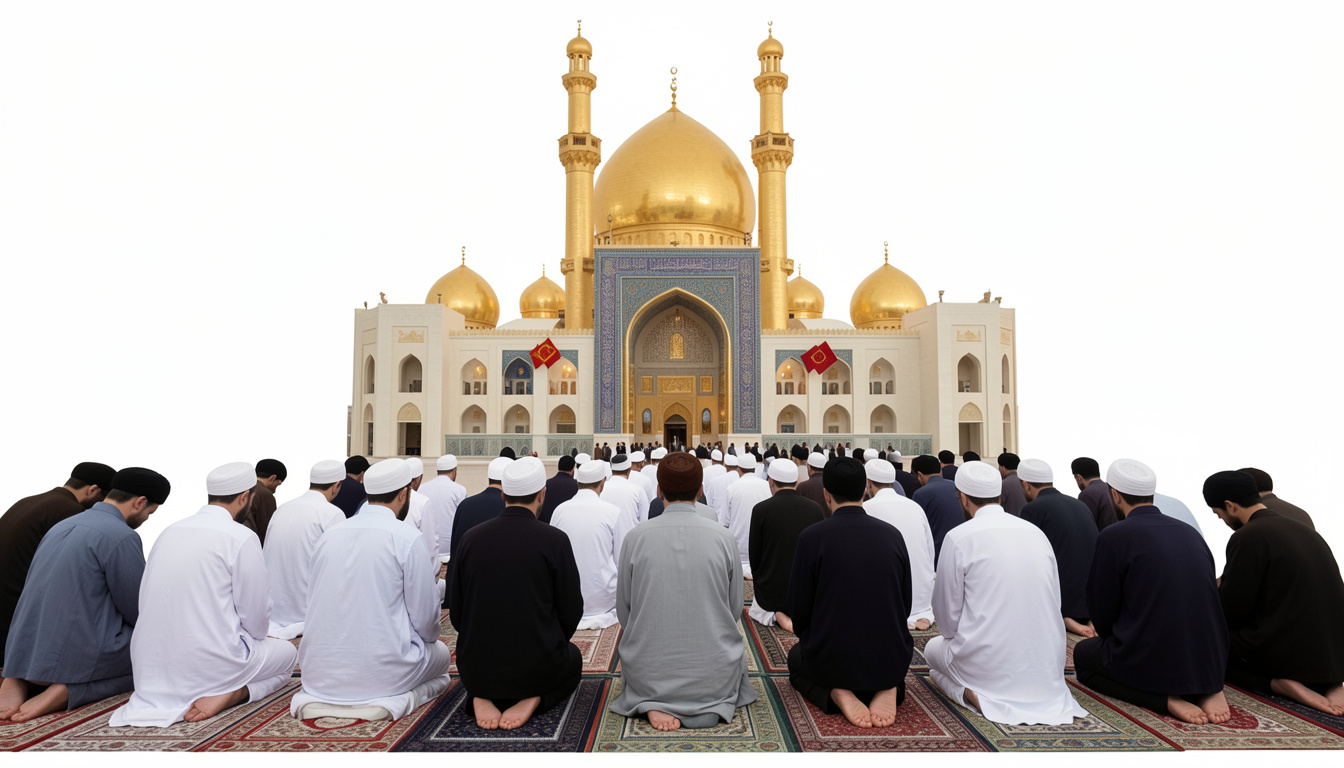
When most people think of a masjid Imam, the first image that comes to mind is someone standing at the front of the prayer hall, leading the congregation in beautiful recitation.
While leading the five daily prayers is a core duty, the role of an Imam in Islam is vastly deeper. In the tradition of the Prophet Muhammad (peace be upon him), the Imam is not just a prayer leader; he is a community shepherd, a counselor, a spiritual guide, and a community leader.
Let’s explore the profound duties of an Imam as outlined by the Holy Quran, the Sunnah, and the beautiful examples from the life of the Prophet ﷺ.
1. Leading the Congregation with Knowledge and Care
The most visible duty of an Imam is leading the Salah (prayer). However, Islam places strict spiritual and intellectual criteria on who should stand in that position.
- According to the Sunnah: The Prophet ﷺ made it clear that leadership of prayer is tied to knowledge of Islam. He said:
“The person who should lead the people in prayer is the one who is best versed in the book of Allah…” (Sahih Muslim)
- The Prophet’s Example: The Prophet ﷺ was deeply empathetic to his congregation. He taught Imams never to make the public prayers burdensomely long, as there might be elderly, sick, or busy people behind them.
Anas bin Malik reported: “The Prophet ﷺ would shorten the prayer and perfect it.” (Sahih al-Bukhari). He would even shorten the prayer if he heard a baby crying, out of mercy for the mother praying in the congregation.
2. Education and Spiritual Purification (Tazkiyah)
An Imam is an inheritor of the Prophets, which means his duty is to teach the community the Quran, the Sunnah, and how to purify their hearts.
- According to the Quran: Allah describes the mission of the Messenger—which extends to the community’s leaders—in Surah Al-Jumu’ah:
“It is He who has sent among the unlettered a Messenger from themselves reciting to them His verses and purifying them and teaching them the Book and wisdom…” (Quran 62:2)
- The Prophet’s Example: The Prophet’s masjid in Madinah was fundamentally a university. He would sit with his companions after prayers, answer their questions, correct their mistakes gently, and deliver the Friday Khutbah (sermon) to address current social issues and elevate their faith.
3. Community Counseling and Conflict Resolution
A masjid is a sanctuary for the broken-hearted and those seeking guidance. An Imam must be accessible to his people, helping them navigate family issues, financial distress, and personal doubts.
- The Prophet’s Example: The Prophet ﷺ never walled himself off from his community. He was accessible to everyone—men, women, children, and even strangers.
In one famous incident recorded in Sahih al-Bukhari, a Bedouin entered the masjid and began to urinate in a corner. The companions rushed to stop him angrily, but the Prophet ﷺ stopped them, saying, “Leave him alone and pour a bucket of water over his urine.” He then gently explained to the man that masjids are built for prayer and the remembrance of Allah. An Imam must mimic this patience and accessibility.
4. Uniting the Community and Fostering Brotherhood
An Imam’s job is to build bridges, not walls. He must ensure that the masjid is an inclusive space where Muslims of all backgrounds feel welcome and united.
- According to the Quran: Allah commands unity in the Ummah:
“And hold firmly to the rope of Allah all together and do not become divided.” (Quran 3:103)
- The Prophet’s Example: When the Prophet ﷺ established the masjid in Madinah, his very first major social action was Al-Mu’akhaah (the pairing of brotherhood) between the local helpers (Ansar) and the refugees (Muhajirun). He used the masjid as the foundational base to wipe out tribal racism and socio-economic divisions.
5. Social Welfare and Community Service
An Imam cannot care for the spiritual hearts of his congregation while ignoring their empty stomachs. The masjid under the guidance of an Imam should be a hub for charity and social justice.
- The Prophet’s Example: The Prophet’s masjid featured the Suffah—a dedicated porch at the back of the mosque that served as a homeless shelter and academy for the poor. Whenever charity or food came to the Prophet ﷺ, he immediately sent it to the people of the Suffah. The Imam must actively oversee Zakat and Sadaqah distribution to ensure no one in his locality goes hungry.
Conclusion: The Imam as a Shepherd
To summarize the weight of this role, we look to the comprehensive words of the Prophet Muhammad ﷺ:
“Each of you is a shepherd and each of you is responsible for his flock. The leader is a shepherd and is responsible for his flock…” (Sahih al-Bukhari)
An Imam is a shepherd. Standing at the front of the prayer lines is just the beginning; his true success lies in how well he serves, loves, and guides the people when the prayer is over.