
Why Muslims Remain Backward in India, and What Should Be Done

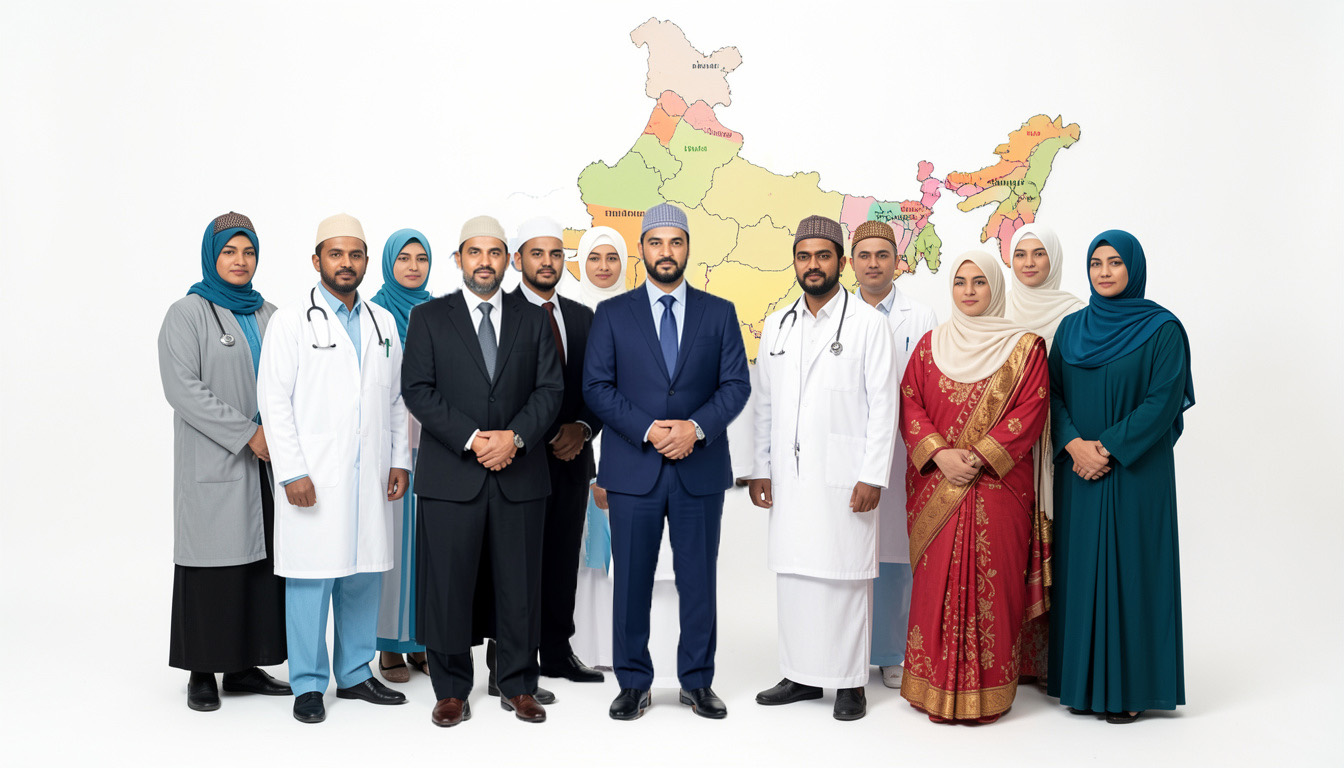
Why Muslims Remain Backward in India, and What Should Be Done
Securing aThe question of why many Muslims remain behind in education, jobs, political influence, and economic progress in India is complex. It cannot be explained by religion alone; it is the result of a long mix of history, poverty, weak representation, social conservatism, unequal access to opportunity, and broader political conditions. K. Rahman Khan’s *Indian Muslims: The Way Forward* is centered on this very concern, asking why the community has lagged in many spheres and what practical steps can change that.
Historical Burden
One major reason is historical disadvantage. For many Indian Muslims, decline began long before independence, when changes in power, administration, trade, and education reduced their social and economic position. Over time, this created a community that entered modern India with fewer resources, less institutional strength, and weaker access to elite education and public employment than some other groups. That disadvantage did not disappear after 1947; it continued through generations and shaped present outcomes. [isamveri](https://isamveri.org/pdfdrg/G00315/GADAMY.pdf)
Education Gap
Education is one of the biggest fault lines. Many Muslim families, especially among the poor, have struggled with low literacy, high dropout rates, and weak access to quality schools and colleges. In some places, children are pushed into narrow educational paths that do not prepare them for modern jobs, while financial pressure forces families to prioritize short-term survival over long-term learning. When education lags, employment and social mobility also lag. [bamu.ac](http://bamu.ac.in/assets/Backwardness%20of%20Indian%20Muslims.pdf)
Economic Exclusion
A second reason is economic concentration in low-income neighborhoods and low-return occupations. Large sections of the community live in areas where public services are weak and jobs are scarce, which limits upward mobility. Small business ownership, formal credit access, and entry into skilled professions remain difficult for many. This creates a cycle in which poverty reduces opportunity, and limited opportunity reproduces poverty. [frontline.thehindu](https://frontline.thehindu.com/cover-story/behind-their-plight/article30211865.ece)
Social and Internal Challenges
There are also internal social challenges that must be faced honestly. Conservative attitudes, weak reform movements, gender inequality, and resistance to modern educational and civic change have slowed progress in some sections of the community. Where women’s education is neglected, family income, health, and social advancement all suffer. Where community leadership focuses more on identity preservation than capability building, progress becomes even slower.
Political Under-representation
Politics matters too. When a community lacks strong, credible, and united leadership, it finds it harder to influence policy, protect its interests, and demand fair development. Fragmentation, short-term politics, and dependence on symbolic representation weaken collective voice. At the same time, broader social polarization and majoritarian pressures can make minorities feel insecure and excluded, which further discourages participation and confidence.
What Should Be Done
The answer is not blame, but reform. The first priority must be **education**: better schools, scholarships, coaching, digital access, and career guidance, especially for poor families. Second, the community must invest in women’s education and participation, because no society can advance while half of its population is held back. Third, there must be stronger support for entrepreneurship, skill training, and access to formal jobs so that youth can move beyond low-income work. [hubsociology](https://hubsociology.com/indian-muslims-largest-most-backward-minority/)
Reform From Within
Community reform is equally important. Religious and social leadership should encourage modern education, scientific thinking, ethical entrepreneurship, and social responsibility. Personal and family practices that delay progress should be re-examined. This does not mean abandoning identity; it means strengthening identity through learning, dignity, and self-reliance. The community needs leaders who speak honestly about problems instead of hiding them behind slogans. [dw](https://www.dw.com/en/expert-examines-why-indias-muslims-are-in-crisis/a-6461797)
The Role of the State
The state also has a duty. Fair development requires better housing, schools, healthcare, sanitation, and employment access in minority-dominated localities. Public policy should focus on inclusion, not tokenism. Equal opportunity in practice is essential if social gaps are to close. Development is most effective when it reaches the most neglected citizens first. [m.thewire](https://m.thewire.in/article/communalism/india-must-confront-and-overcome-forces-of-exclusion-fear-and-majoritarianism)
Conclusion
Indian Muslims remain backward in many spheres not because of one single cause, but because of a long chain of historical exclusion, weak educational progress, economic vulnerability, and delayed reform. The way forward lies in education, women’s empowerment, internal social change, stronger leadership, and fair state support. If these areas improve together, the community can move from survival to confidence, and from marginalization to participation. [thriftbooks](https://www.thriftbooks.com/w/indian-muslims-the-way-forward-why-muslims-remain-backward-in-all-spheres-and-what-should-be-done-about-it_k-rahman-khan/39288655/)